Cuenca Verde Water Fund (Medellín)
Colombia, Latin America & Caribbean
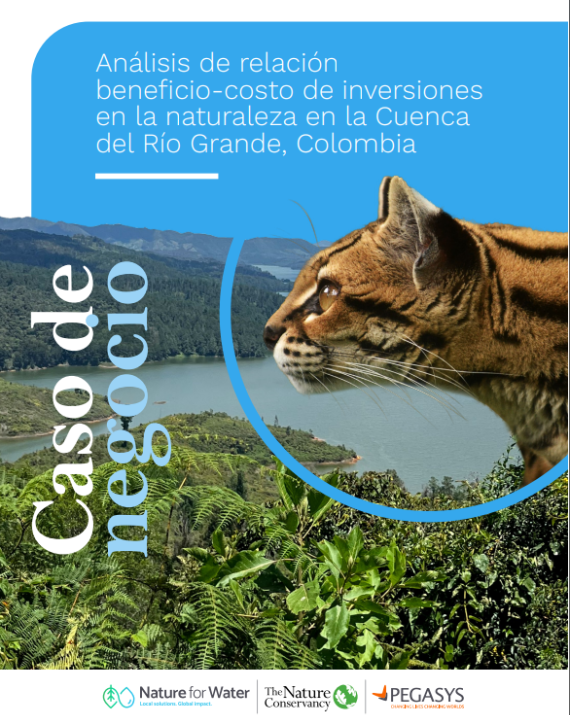
The Cuenca Verde Water Fund was created in 2013 to protect, maintain, and preserve ecosystem services in the source watersheds servicing the Aburrá Valley and Northern and Eastern Antioquia, which encompasses Medellín and other neighboring cities.
The Water Fund is a collective action mechanism convening public, private, and civil society actors – including communities – to protect and restore Medellín’s source watersheds to achieve water security, community resilience, and biodiversity outcomes. As a governance platform, the Water Fund pools investments from key stakeholders to jointly manage implementation, impact reporting, and adaptive management according to a jointly agreed upon strategic plan.
The Aburrá Valley and Northern and Eastern Antioquia is an area rich in natural resources, but unsustainable land use and climate change are threatening the region’s water security, rich cultural heritage, and incredible biodiversity.
Medellín and the metropolitan area of the Aburrá Valley, receive 58 percent of its water from the La Fe reservoir, fed by the Medellín River. However, watershed degradation – caused primarily by agricultural and urban expansion – is spurring water scarcity and quality concerns increasing costs for water providers and putting communities and biodiversity at risk. Additionally, landslides threaten hillside communities built on soft soils and increasing periods of drought are causing both water and energy shortages, as a good portion of electricity comes from hydropower plants within the basin.
To address these challenges, the Water Fund aims to restore 300 ha of riparian areas, protect 6,850 ha of mainly agricultural land & forests, and implement agricultural best management practices on 6,400 ha. The measures would mitigate over 870,000 tons of CO2 emissions over 10 years and benefit approximately 2.7M people in the basin.
Continue your learning

© Ashraful Islam/TNC Photo Contest 2021